
 Technology Business Research, Inc.
https://tbri.com/wp-content/uploads/2026/10/Accenture-Assurance_Blog.png
1350
1080
Bozhidar Hristov, Principal Analyst
https://tbri.com/wp-content/uploads/2021/09/TBR-Insight-Center-Logo.png
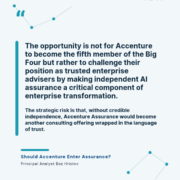
Bozhidar Hristov, Principal Analyst2026-10-16 12:34:552026-10-16 12:34:55Should Accenture Enter Assurance?Technology Business Research, Inc.
https://tbri.com/wp-content/uploads/2026/10/Accenture-Assurance_Blog.png
1350
1080
Bozhidar Hristov, Principal Analyst
https://tbri.com/wp-content/uploads/2021/09/TBR-Insight-Center-Logo.png
Bozhidar Hristov, Principal Analyst2026-10-16 12:34:552026-10-16 12:34:55Should Accenture Enter Assurance?
 Technology Business Research, Inc.
https://tbri.com/wp-content/uploads/2026/10/5G-and-Monetization_Blog.png
1350
1080
Chris Antlitz, Principal Analyst
https://tbri.com/wp-content/uploads/2021/09/TBR-Insight-Center-Logo.png
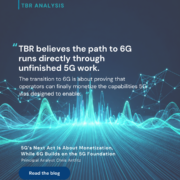
Chris Antlitz, Principal Analyst2026-10-09 09:09:232026-10-09 09:09:235G’s Next Act Is About Monetization, While 6G Builds on the 5G Foundation
 Technology Business Research, Inc.
https://tbri.com/wp-content/uploads/2026/10/TBR-Analyst-Event-Recap.png
1350
1080
Patrick Heffernan, Practice Manager and Principal Analyst
https://tbri.com/wp-content/uploads/2021/09/TBR-Insight-Center-Logo.png
Patrick Heffernan, Practice Manager and Principal Analyst2026-10-08 08:24:392026-10-07 16:48:33Exploring KPMG’s Role in Quantum
 Technology Business Research, Inc.
https://tbri.com/wp-content/uploads/2026/10/Holiday-Shopping-Is-Becoming-an-AI-Story_Blog.png
1350
1080
Stephanie Long, Senior Analyst
https://tbri.com/wp-content/uploads/2021/09/TBR-Insight-Center-Logo.png
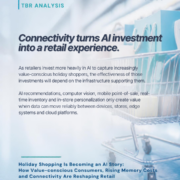
Stephanie Long, Senior Analyst2026-10-07 14:15:442026-10-07 14:15:44Holiday Shopping Is Becoming an AI Story: How Value-conscious Consumers, Rising Memory Costs and Connectivity Are Reshaping Retail
 Technology Business Research, Inc.
https://tbri.com/wp-content/uploads/2026/10/AI-Is-Changing-Enterprise-Networking_Blog.png
1350
1080
Stephanie Long, Senior Analyst
https://tbri.com/wp-content/uploads/2021/09/TBR-Insight-Center-Logo.png
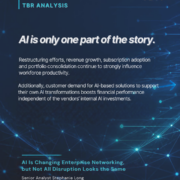
Stephanie Long, Senior Analyst2026-10-06 17:26:542026-10-07 14:05:35AI Is Changing Enterprise Networking, but Not All Disruption Looks the SameTechnology Business Research, Inc.
https://tbri.com/wp-content/uploads/2026/10/TBR-Analyst-Event-Recap.png
1350
1080
Patrick Heffernan, Practice Manager and Principal Analyst
https://tbri.com/wp-content/uploads/2021/09/TBR-Insight-Center-Logo.png
Patrick Heffernan, Practice Manager and Principal Analyst2026-10-03 16:22:532026-10-07 16:41:26Exploring KPMG’s Role in AI
 https://tbri.com/wp-content/uploads/2026/09/midmarket_getty-images_canva-pro.png
1350
1080
Jill Cookinham, Research Analyst
https://tbri.com/wp-content/uploads/2021/09/TBR-Insight-Center-Logo.png
Jill Cookinham, Research Analyst2026-09-25 12:03:322026-09-25 12:03:32The Midmarket Opportunity: Which GSIs Can — and Should — Pursue It?
 https://tbri.com/wp-content/uploads/2026/09/puzzle-pieces.png
1350
1080
Patrick Heffernan, Practice Manager and Principal Analyst
https://tbri.com/wp-content/uploads/2021/09/TBR-Insight-Center-Logo.png
Patrick Heffernan, Practice Manager and Principal Analyst2026-09-11 09:34:192026-09-11 09:34:19The Time to Start Building Your Multiparty Alliance is Now
 https://tbri.com/wp-content/uploads/2026/08/priscilla-du-preez-BjhUu6BpUZA-unsplash-scaled.jpg
1707
2560
Steve Vachon, Senior Analyst
https://tbri.com/wp-content/uploads/2021/09/TBR-Insight-Center-Logo.png
Steve Vachon, Senior Analyst2026-08-24 13:17:542026-08-26 08:01:20Convergence Takes Center Stage as U.S. Telecom Operators Pursue the Next Phase of Growth
Our most-read analysis, free in your inbox each week!
Fill out the form to the right to subscribe to Insights Flight today
AI Buzz Sparks IT Infrastructure Shifts, but Privacy and Strategic Challenges Are Impacting Adoption
/by Ben Carbonneau, Senior AnalystThe industry enthusiasm surrounding AI has quickly led to shifts in organizations’ strategic priorities and expected investments such as demand for servers. Despite the hype, few organizations have operationalized GenAI to date. Instead, most are focused on overcoming initial barriers to adoption, including understanding the business implications of this new technology frontier.
GenAI, IT Modernization and Strategic M&A Drive Infrastructure as a Service and Platform as a Service Growth
/by Catie Merrill, Senior AnalystTop hyperscalers Amazon Web Services (AWS) and Microsoft are capturing legacy Oracle and SAP workloads as customers continue to migrate to the cloud to not only outsource their IT operations but also drive lasting business value. Though the geopolitical outlook is increasingly uncertain, we expect customers will continue to prioritize more traditional “lift and shift” migrations, and steps vendors are taking to deliver more integrated solutions could help.
Harnessing AI and Automation in Business Process Outsourcing to Drive Growth Amid Shifting Buyer Priorities
/by Kelly Lesiczka, Senior AnalystVendors’ business process outsourcing (BPO) businesses continue to benefit from the ongoing shift in buyer priorities from innovation and growth toward business resiliency and optimization. Buyers are investing in automating business processes to free up costs, providing pathways to growth for vendors with AI-powered and platform-based offerings.
Emerging Consultancy Trends: Talent Management and Innovation in the Spotlight
/by Patrick Heffernan, Practice Manager and Principal AnalystTechnology continues to threaten the nature of consulting engagements, requiring consultancies to showcase value and deliver on outcomes. Greater investment in talent frameworks, structure and skill will equip staff to lead client discussions and effectively leverage technology to assist workflows. Partnerships remain a core piece of the technology integration, bringing in new expertise and go-to-market opportunities that enable consultancies to meet a wider variety of client needs. Client retention remains a priority across consultancies but will require the firms to effectively deliver value through services.
Federal IT Spending Will Remain Robust in FFY25 Amid AI Prioritization
/by John Caucis, Senior AnalystSince coming into office, the Biden administration has fueled an unprecedented federal IT bull market. While the White House’s proposed federal civilian technology budget of $75.1 billion for federal fiscal year 2025 (FFY25) is the smallest increase in several years (up less than 1% compared to $74.5 billion in FFY24), it is still an increase of more than 14% from $65.8 billion in FFY23, and up 25% from $60.1 billion in FFY21, the last year of the prior administration. FFY25 has started with a continuing resolution (CR), as have most of the last several fiscal year. The impact of the latest CR on the largest federal systems integrators may be limited to shorter-cycle programs in their order books, but some disruptions to larger, longer-term engagements are not out of the question.
Meet MAMAA: The Top 5 Hyperscalers Shaping the Future of Digital Ecosystems
/by Chris Antlitz, Principal AnalystTBR research shows only the Tier 1 hyperscalers can transcend most, if not all, of the major lifestyle categories to provide a seamless end-to-end ecosystem experience, touching all aspects of people’s lives, primarily due to their scale and access to resources.
Growing Infrastructure as a Service Commitments and Competitive Dynamics
/by Catie Merrill, Senior AnalystMarket leaders Amazon Web Services (AWS) and Microsoft have highlighted that customers are signing larger cloud contracts with longer terms. At least in the case of AWS, customers are increasingly applying their cloud credits toward one- or three-year subscription offerings like Savings Plans and Reserved Instances.
Leidos Sees Strong Bookings and Sustained Growth Across National Security, Health and International Sectors
/by John Caucis, Senior AnalystLeidos’ reorganization is delivering positive results, particularly down the company’s income statement, where profitability reached record levels in 1H24. Midsingle-digit top-line growth is being buoyed by strong bookings activity with the Department of Defense and civilian agencies.
Dell Grows Its AI Factory Portfolio with the Integration of New NVIDIA AI Solutions
/by Ben Carbonneau, Senior AnalystMuch like its OEM peers, Dell Technologies (Dell) has increasingly made partnering a cornerstone of its strategy, particularly as it relates to the company’s AI business. Dell leverages its AI partner ecosystem to drive the codevelopment of AI solutions like those included in the company’s Dell AI Factory with NVIDIA portfolio.
Telecom Infrastructure Services Operating Margin Climbs as Shift to Maintenance Services Offsets U.S. Market Decline
/by Michael Soper, Senior AnalystAutomation, analytics, AI and machine learning will prove critical to helping vendors improve margins. Examples include portions of Nokia’s AVA (Analytics, Virtualization and Automation) portfolio and Ericsson’s Operations Engine. However, with a significant portion of revenue coming from deployment services, RAN-centric vendors will be unable to expand overall telecom infrastructure services margins significantly.