
 Technology Business Research, Inc.
https://tbri.com/wp-content/uploads/2026/10/Accenture-Assurance_Blog.png
1350
1080
Bozhidar Hristov, Principal Analyst
https://tbri.com/wp-content/uploads/2021/09/TBR-Insight-Center-Logo.png
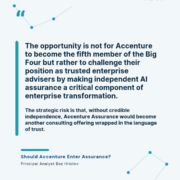
Bozhidar Hristov, Principal Analyst2026-10-16 12:34:552026-10-16 12:34:55Should Accenture Enter Assurance?Technology Business Research, Inc.
https://tbri.com/wp-content/uploads/2026/10/Accenture-Assurance_Blog.png
1350
1080
Bozhidar Hristov, Principal Analyst
https://tbri.com/wp-content/uploads/2021/09/TBR-Insight-Center-Logo.png
Bozhidar Hristov, Principal Analyst2026-10-16 12:34:552026-10-16 12:34:55Should Accenture Enter Assurance?
Technology Business Research, Inc.
https://tbri.com/wp-content/uploads/2026/10/Accenture-Assurance_Blog.png
1350
1080
Bozhidar Hristov, Principal Analyst
https://tbri.com/wp-content/uploads/2021/09/TBR-Insight-Center-Logo.png
Bozhidar Hristov, Principal Analyst2026-10-16 12:34:552026-10-16 12:34:55Should Accenture Enter Assurance?Technology Business Research, Inc.
https://tbri.com/wp-content/uploads/2026/10/Accenture-Assurance_Blog.png
1350
1080
Bozhidar Hristov, Principal Analyst
https://tbri.com/wp-content/uploads/2021/09/TBR-Insight-Center-Logo.png
Bozhidar Hristov, Principal Analyst2026-10-16 12:34:552026-10-16 12:34:55Should Accenture Enter Assurance?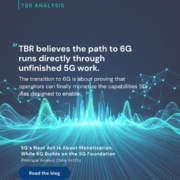 Technology Business Research, Inc.
https://tbri.com/wp-content/uploads/2026/10/5G-and-Monetization_Blog.png
1350
1080
Chris Antlitz, Principal Analyst
https://tbri.com/wp-content/uploads/2021/09/TBR-Insight-Center-Logo.png
Chris Antlitz, Principal Analyst2026-10-09 09:09:232026-10-09 09:09:235G’s Next Act Is About Monetization, While 6G Builds on the 5G Foundation
Technology Business Research, Inc.
https://tbri.com/wp-content/uploads/2026/10/5G-and-Monetization_Blog.png
1350
1080
Chris Antlitz, Principal Analyst
https://tbri.com/wp-content/uploads/2021/09/TBR-Insight-Center-Logo.png
Chris Antlitz, Principal Analyst2026-10-09 09:09:232026-10-09 09:09:235G’s Next Act Is About Monetization, While 6G Builds on the 5G Foundation Technology Business Research, Inc.
https://tbri.com/wp-content/uploads/2026/10/TBR-Analyst-Event-Recap.png
1350
1080
Patrick Heffernan, Practice Manager and Principal Analyst
https://tbri.com/wp-content/uploads/2021/09/TBR-Insight-Center-Logo.png
Patrick Heffernan, Practice Manager and Principal Analyst2026-10-08 08:24:392026-10-07 16:48:33Exploring KPMG’s Role in Quantum
Technology Business Research, Inc.
https://tbri.com/wp-content/uploads/2026/10/TBR-Analyst-Event-Recap.png
1350
1080
Patrick Heffernan, Practice Manager and Principal Analyst
https://tbri.com/wp-content/uploads/2021/09/TBR-Insight-Center-Logo.png
Patrick Heffernan, Practice Manager and Principal Analyst2026-10-08 08:24:392026-10-07 16:48:33Exploring KPMG’s Role in Quantum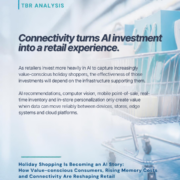 Technology Business Research, Inc.
https://tbri.com/wp-content/uploads/2026/10/Holiday-Shopping-Is-Becoming-an-AI-Story_Blog.png
1350
1080
Stephanie Long, Senior Analyst
https://tbri.com/wp-content/uploads/2021/09/TBR-Insight-Center-Logo.png
Stephanie Long, Senior Analyst2026-10-07 14:15:442026-10-07 14:15:44Holiday Shopping Is Becoming an AI Story: How Value-conscious Consumers, Rising Memory Costs and Connectivity Are Reshaping Retail
Technology Business Research, Inc.
https://tbri.com/wp-content/uploads/2026/10/Holiday-Shopping-Is-Becoming-an-AI-Story_Blog.png
1350
1080
Stephanie Long, Senior Analyst
https://tbri.com/wp-content/uploads/2021/09/TBR-Insight-Center-Logo.png
Stephanie Long, Senior Analyst2026-10-07 14:15:442026-10-07 14:15:44Holiday Shopping Is Becoming an AI Story: How Value-conscious Consumers, Rising Memory Costs and Connectivity Are Reshaping Retail Technology Business Research, Inc.
https://tbri.com/wp-content/uploads/2026/10/AI-Is-Changing-Enterprise-Networking_Blog.png
1350
1080
Stephanie Long, Senior Analyst
https://tbri.com/wp-content/uploads/2021/09/TBR-Insight-Center-Logo.png
Stephanie Long, Senior Analyst2026-10-06 17:26:542026-10-07 14:05:35AI Is Changing Enterprise Networking, but Not All Disruption Looks the SameTechnology Business Research, Inc.
https://tbri.com/wp-content/uploads/2026/10/TBR-Analyst-Event-Recap.png
1350
1080
Patrick Heffernan, Practice Manager and Principal Analyst
https://tbri.com/wp-content/uploads/2021/09/TBR-Insight-Center-Logo.png
Patrick Heffernan, Practice Manager and Principal Analyst2026-10-03 16:22:532026-10-07 16:41:26Exploring KPMG’s Role in AI
Technology Business Research, Inc.
https://tbri.com/wp-content/uploads/2026/10/AI-Is-Changing-Enterprise-Networking_Blog.png
1350
1080
Stephanie Long, Senior Analyst
https://tbri.com/wp-content/uploads/2021/09/TBR-Insight-Center-Logo.png
Stephanie Long, Senior Analyst2026-10-06 17:26:542026-10-07 14:05:35AI Is Changing Enterprise Networking, but Not All Disruption Looks the SameTechnology Business Research, Inc.
https://tbri.com/wp-content/uploads/2026/10/TBR-Analyst-Event-Recap.png
1350
1080
Patrick Heffernan, Practice Manager and Principal Analyst
https://tbri.com/wp-content/uploads/2021/09/TBR-Insight-Center-Logo.png
Patrick Heffernan, Practice Manager and Principal Analyst2026-10-03 16:22:532026-10-07 16:41:26Exploring KPMG’s Role in AI https://tbri.com/wp-content/uploads/2026/09/midmarket_getty-images_canva-pro.png
1350
1080
Jill Cookinham, Research Analyst
https://tbri.com/wp-content/uploads/2021/09/TBR-Insight-Center-Logo.png
Jill Cookinham, Research Analyst2026-09-25 12:03:322026-09-25 12:03:32The Midmarket Opportunity: Which GSIs Can — and Should — Pursue It?
https://tbri.com/wp-content/uploads/2026/09/midmarket_getty-images_canva-pro.png
1350
1080
Jill Cookinham, Research Analyst
https://tbri.com/wp-content/uploads/2021/09/TBR-Insight-Center-Logo.png
Jill Cookinham, Research Analyst2026-09-25 12:03:322026-09-25 12:03:32The Midmarket Opportunity: Which GSIs Can — and Should — Pursue It? https://tbri.com/wp-content/uploads/2026/09/puzzle-pieces.png
1350
1080
Patrick Heffernan, Practice Manager and Principal Analyst
https://tbri.com/wp-content/uploads/2021/09/TBR-Insight-Center-Logo.png
Patrick Heffernan, Practice Manager and Principal Analyst2026-09-11 09:34:192026-09-11 09:34:19The Time to Start Building Your Multiparty Alliance is Now
https://tbri.com/wp-content/uploads/2026/09/puzzle-pieces.png
1350
1080
Patrick Heffernan, Practice Manager and Principal Analyst
https://tbri.com/wp-content/uploads/2021/09/TBR-Insight-Center-Logo.png
Patrick Heffernan, Practice Manager and Principal Analyst2026-09-11 09:34:192026-09-11 09:34:19The Time to Start Building Your Multiparty Alliance is Now https://tbri.com/wp-content/uploads/2026/08/priscilla-du-preez-BjhUu6BpUZA-unsplash-scaled.jpg
1707
2560
Steve Vachon, Senior Analyst
https://tbri.com/wp-content/uploads/2021/09/TBR-Insight-Center-Logo.png
Steve Vachon, Senior Analyst2026-08-24 13:17:542026-08-26 08:01:20Convergence Takes Center Stage as U.S. Telecom Operators Pursue the Next Phase of Growth
https://tbri.com/wp-content/uploads/2026/08/priscilla-du-preez-BjhUu6BpUZA-unsplash-scaled.jpg
1707
2560
Steve Vachon, Senior Analyst
https://tbri.com/wp-content/uploads/2021/09/TBR-Insight-Center-Logo.png
Steve Vachon, Senior Analyst2026-08-24 13:17:542026-08-26 08:01:20Convergence Takes Center Stage as U.S. Telecom Operators Pursue the Next Phase of GrowthOur most-read analysis, free in your inbox each week!
Fill out the form to the right to subscribe to Insights Flight today
GenAI Reshapes IT Services Talent Strategy as Vendors Balance Innovation, Ecosystem Alignment and Economic Headwinds
/by Bozhidar Hristov, Principal AnalystIn the short-to-mid-term, TBR expects generative AI (GenAI)-specific training to become a standard part of an IT services or consulting professional’s basic tool kit, with specialized training around technology partners’ solutions or a company’s own IP and platforms reserved for those professionals dedicated to AI roles. While some may argue every role is an AI role, the near-term reality is that only a select few among the broader professional services talent base will need specialized training, and the associated budgets will decrease in the coming years.
DOGE Federal IT Vendor Impact Series: Leidos
/by John Caucis, Senior AnalystIn FY25 Leidos will tout its mission-critical solutions to enhance outcomes quickly, cost-effectively and at scale for federal agencies. Leidos will accelerate efforts to draw closer to its federal clients, emphasizing how they can more effectively utilize the company’s delivery scale and depth of mission expertise to comply with DOGE’s mandates, the overarching IT objectives of the Trump administration and the enduring need to modernize federal technology infrastructures.
DOGE Federal IT Vendor Impact Series: CGI Federal
/by John Caucis, Senior AnalystCGI Federal is confident it can adapt to outcome-focused contracting in federal IT but is uncertain how quickly the transition can be completed. CGI Federal has been a perennial margin leader in TBR’s Federal IT Services Benchmark due to its traction with its ever-expanding suite of homespun intellectual property (IP)-based offerings like Sunflower and Momentum, and demand for these offerings will at least endure, but likely increase, under DOGE.
DOGE Federal IT Vendor Impact Series: General Dynamics Technologies
/by John Caucis, Senior AnalystGDT is not going to give up on the federal health market or on consulting, but TBR anticipates the vendor will increasingly prioritize defense opportunities in the interim, such as a recently awarded contract worth up to $5.6 billion to manage the DOD’s Mission Partner Environment. The DOD has historically been GDT’s largest client and was responsible for more than 58% of its revenue in 1Q25. While the Trump administration is asking for a 23% reduction in nondefense discretionary funding in its FFY26 budget proposal, it wants to keep the DOD’s discretionary spending roughly on par with the $892.5 billion stopgap for FFY25. GDIT is well positioned to capitalize on the DOD becoming increasingly interested in emerging technologies, given its experience with fixed-price and outcome-based contracting.
DOGE Federal IT Vendor Impact Series: IBM Federal
/by John Caucis, Senior AnalystCACI believes demand will remain strong through the remainder of its FY25 and into its FY26 for technologies and capabilities at the core of the company’s portfolio. Uninterrupted sales growth and consistent margin performance indicate CACI’s offerings remain well aligned to the Trump administration’s IT investment priorities, particularly as the new administration prepares to expand investment in cybersecurity, national security and national defense, and advanced space-based communications systems for defense, intelligence and civil applications. CACI executives also noted that the federal budget environment is slowly becoming more constructive and more transparent, a positive harbinger for CACI and its fellow federal IT contractors.
DOGE Federal IT Vendor Impact Series: CACI
/by John Caucis, Senior AnalystCACI believes demand will remain strong through the remainder of its FY25 and into its FY26 for technologies and capabilities at the core of the company’s portfolio. Uninterrupted sales growth and consistent margin performance indicate CACI’s offerings remain well aligned to the Trump administration’s IT investment priorities, particularly as the new administration prepares to expand investment in cybersecurity, national security and national defense, and advanced space-based communications systems for defense, intelligence and civil applications. CACI executives also noted that the federal budget environment is slowly becoming more constructive and more transparent, a positive harbinger for CACI and its fellow federal IT contractors.
Trade Wars and the Professional Services Fallout: Talent, Growth and Operational Models in Flux
/by Patrick Heffernan, Practice Manager and Principal AnalystTrade wars and tariff uncertainties conjure up visions of cargo ships, ports, factories and stacks of goods stranded by economic chaos, not consultants and IT services professionals. Fear, uncertainty and doubt are usually good for the consulting business, while the higher costs of running a business fuel demand for more outsourcing. This time, things might be different. This trade war, even if partially suspended for now, may significantly disrupt professional services, especially if tariffs continue creeping into new areas and the trust deficit continues to grow. Steel now, services later.
Infosys, Cognizant, TCS and Wipro ITS Double Down on Competitive Pricing Strategy While Trying to Enhance Client Engagement
/by Jill Cookinham, Research AnalystThis quarter, TBR Fourcast looks at four India-centric vendors — Infosys, Cognizant, Wipro IT Services (ITS) and Tata Consultancy Services (TCS) — and analyzes how investments in portfolios, training and innovation are positioning them for growth.
5 Key Questions on Big Four Evolution and Strategy
/by Patrick Heffernan, Practice Manager and Principal AnalystThe Big Four professional services firms — Deloitte, EY, KPMG and PwC — have all been undergoing organizational changes in the last couple years. TBR regularly hears five questions about how these firms manage themselves, grow and change. Taking a longitudinal view allows TBR to see that recent restructurings, layoffs and offerings all reflect how these firms are trying to address the following: who gets the best talent, who decides what’s next, who sells, how everyone in a firm knows what everyone else does, and what role will managed services play.
DOGE Federal IT Vendor Impact Series: Accenture Federal Services
/by John Caucis, Senior AnalystThe full impact of the 10 canceled task orders on Accenture Federal Services (AFS) remains unclear, but TBR’s secondary research indicates the terminated work has a total contract value of nearly $93 million, including a $35 million order from DOE’s CIO office and a $2 million order for geospatial services. If we assume all $93 million worth of orders was booked by AFS as the prime awardee, that sum would represent just under 2% of AFS’ estimated FY24 revenue of $5.4 billion.